5 Point Screening Program
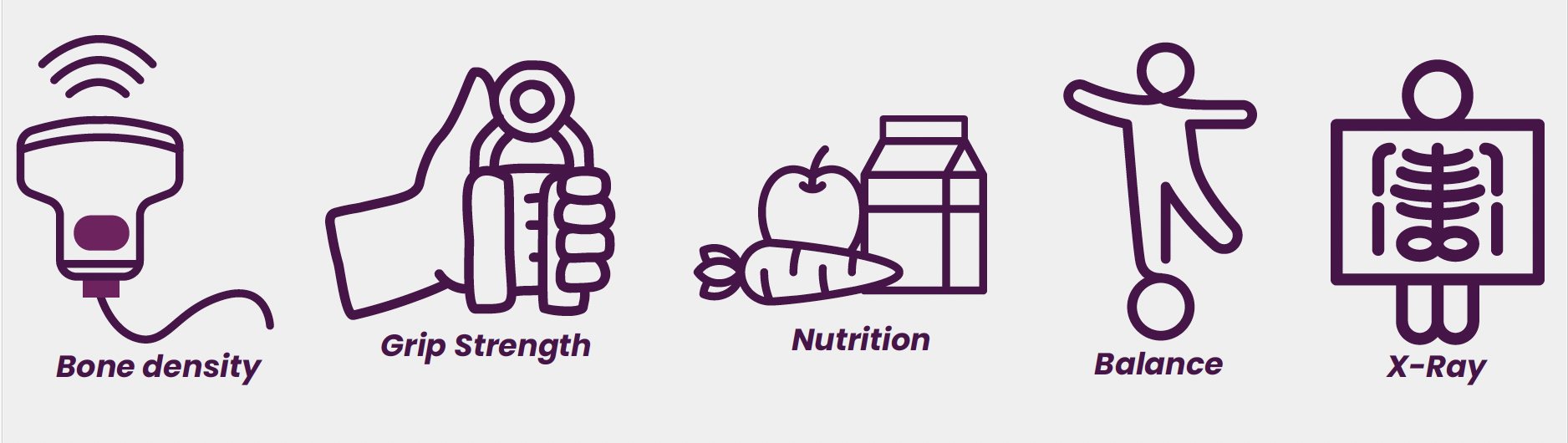
You’re probably used to going to your doctor and having your temperature, heart rate, respiratory rate, blood pressure, and oxygen saturation checked. These are all screenings that give you and your doctor an overall picture of your health. However, there is a lot more happening in your body outside of what those tests show. At the Wellness Center for Bone and Joint Health, we have a free 5-Point Screening Program that tells you about your bone and joint health, fall risk, and overall longevity.
Ultrasound Bone Density
It is important to know your bone density and if you are at risk for osteoporosis or osteopenia. While the DEXA is still the gold standard in determining bone mineral density, an ultrasound test is a great way to learn your bone density between DEXA scans, help determine if you may need a DEXA scan before the recommended age of 65, and arm yourself with the knowledge needed to take care of your bones and joints.
Grip Strength
Your grip strength is an excellent indicator of your overall health and longevity. Grip strength is measured with a handheld device called a “dynamometer.” Your age and gender will affect your strength and how your measurement is interpreted. There is a natural progression of a loss of grip strength as you age, so the goal is to slow that loss and if possible, improve it.
Nutrition
Food is medicine, and how you fuel your body affects how you feel and function. In regards to bone and joint health, calcium and vitamin D focused and anti-inflammatory diets can help prevent osteoporosis and decrease joint pain. Often, there are gaps in our nutrition that we may not notice are there. By filling those gaps with nutrient dense foods, you’ll allow your body to work towards its full potential.
Balance/Fall Risk
Three million older adults are treated for fall-related injuries annually. Of those three million falls, one in five results in a serious injury such as broken bones or head injuries. Many falls are preventable. By knowing your risk and learning safe ways to practice balance, you are then able to make adaptations to your home, decrease your risk of falls, and stay independent longer.
Knee & Hip X-Rays
There are many things that can cause joint pain. The most common cause is osteoarthritis (OA) which is commonly diagnosed using X-rays that show degradation of cartilage and bone. By taking the first step of having your joint evaluated, you can make a plan for next steps. Total joint replacement is not the first step for many suffering from OA–many conservative options, such as lifestyle changes or injections, may help reduce inflammation and pain.