Climbing Everest: A TKR Success Story
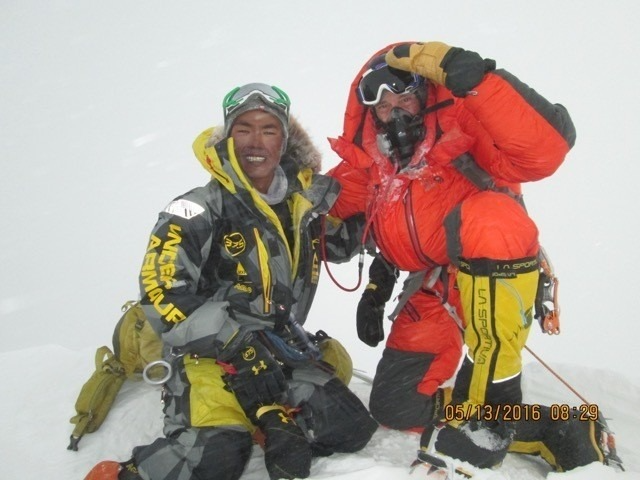
Some people might view having a total knee replacement (TKR) as a setback, but it can be the start of a healthier, more active life. At 61 years old, Greg Paul reached the summit of Mount Everest despite having undergone two total knee replacements. In fact, he was the first known climber to summit Everest with two artificial knees.
On May 13, 2016, Paul stood at 29,032 feet after ascending through high winds, whiteout conditions, and extreme cold. The climb marked the successful end of a journey that included setbacks, failed expeditions from inclement weather, and physical challenges.
His story is not just about mountaineering. It highlights what is possible after joint replacement for those willing to commit to recovery and doing what they love.
From Skiing to Surgery
Paul’s path to Everest began decades earlier on ski slopes far from the Himalayas. “I grew up in New Jersey, and when I was 12 years old, my older brothers took me to Vermont and introduced me to skiing,” he said. “That became my passion from then on.”
Like many facing TKR, Greg’s active lifestyle, especially his skiing style in his youth, lead to damage. “I was what they called a hot dogger,” he said. “That means I skied through bumps and did a lot of jumps, and that wasn't particularly good for my knees.”
By his 40s, the toll had become significant. Even routine movement after climbs became difficult, and the pain began to interfere with everyday activity. Following years of deterioration, he underwent his first knee replacement in May 2008, and a second in November 2012.
Recovery and Return to Activity
Rather than stepping back from the activities he enjoyed, Paul focused on returning as quickly and safely as possible. He approached rehabilitation aggressively, determined to get back to doing what he loved.
He focused on building strength around the joint and maintaining flexibility to prevent stiffness and immobility–both key focuses for anyone recovering from a joint replacement. He emphasized consistency in recovery. “I found the most important thing in rehab was stretching regularly to make sure no scar tissue would build up,” he said. “Also building the muscles around the knees was very important.” Within months of his first surgery, he returned to mountain biking and later resumed skiing. His determination highlights the importance of taking rehabilitation post-surgery seriously.
After his second knee replacement, he approached his rehabilitation with the same tenacity and was able to resume skiing by early January, just two months later. “I probably wouldn't recommend that sort of a rehab schedule,” he noted, “but I'm a ski addict so that's the way it goes.”
Multiple Attempts on Everest
After progressing through increasingly difficult climbs, including Mount Rainier, Elbrus, Aconcagua, and Denali, Everest became a natural next goal.
His first attempt to summit in 2012 was deterred by multiple avalanches. A second attempt in 2014 ended after an ice avalanche in the Khumbu Icefall killed 16 Sherpas, one of the worst disasters in Everest’s history. In 2015, an earthquake triggered another avalanche, killing 9,000 and injuring 21,000 more across Nepal. Despite the repeated setbacks, Paul continued training in Utah’s Wasatch Mountains, using skiing and mountain biking to build endurance.
Reaching the Summit
On May 13, 2016, Paul and his climbing partner, Nawang Tenzing Sherpa, were the last to leave the South Col, the final camp before summiting, but passed more than 30 climbers on their ascent. Paul and Nawang became the first from their group to reach the top that day and the first to summit Everest in two years. They spent fifteen minutes on the summit alone before they were joined by others.
After descending safely, Paul described a moment of recognition from the Sherpa community at base camp. “They all gathered around me and nearly carried me to their tents to congratulate me and celebrate,” he said. “They were honoring me because of my successful summit and safe return… Everest was back in business after years of disasters. They were celebrating a bigger thing than me, but I was in the middle of all of it... and it was very special.”
Life Beyond the Climb
After years of focusing on high-altitude objectives, he has expressed an interest in simply enjoying time in the mountains closer to home. Paul remains active in the outdoor and climbing community in Utah, enjoying skiing and spending time with his family without focusing on training for a 8,000 meter peak. Paul, co-founder of Momentum Climbing Gym in Utah, continues to give back to the community that supported his dreams. “One thing I'm really proud of is that we raised money and we are providing ideas from our talented designers to help build a climbing wall at the Khumbu Climbing Center in the village of Phortse near Everest. The mission of the climbing center is to be a first class instruction and training facility for Nepalese mountain workers so they can be better prepared for their work on the big mountains.”
Approaching the ten year anniversary of his climb, his Everest summit stands as an incredible example of what is physically and mentally possible after knee replacement. Whether it's golfing with friends, gardening, or climbing Earth’s tallest mountain, getting back to what you love after a joint replacement is possible.